
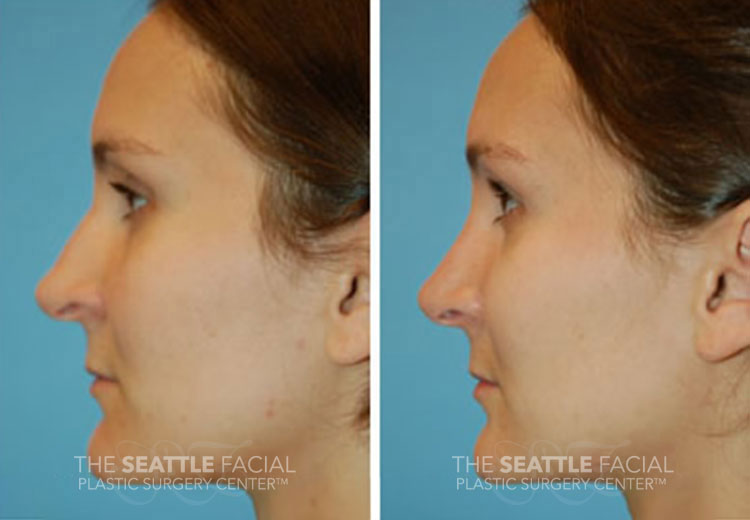
Rhinoplasty for a Bulbous Nasal Tip: Achieving Facial Harmony
A bulbous nasal tip—characterized by a rounded, wide, or drooping appearance—can disrupt facial balance and draw unwanted attention to the nose. At our Seattle practice, we specialize in rhinoplasty techniques designed to refine the nasal tip, enhancing overall facial aesthetics while preserving or improving nasal function.
Understanding the Bulbous Nasal Tip
A bulbous tip often results from:
- Excessive cartilage: Particularly in the lower lateral cartilages, leading to a widened tip.
- Thick skin or soft tissue: Which can obscure underlying nasal structures.
- Weak cartilage support: Causing the tip to appear droopy or ill-defined.
These anatomical factors can make the nasal tip appear disproportionate to the rest of the nose and face.
Surgical Techniques for Refinement
Our approach to correcting a bulbous nasal tip is highly individualized, considering each patient’s unique anatomy and aesthetic goals. Common techniques include:
- Cephalic trim: Removing a portion of the lower lateral cartilages to narrow the tip.
- Suture techniques: Reshaping and repositioning cartilage to achieve a more defined tip.
- Cartilage grafting: Providing additional support and structure when necessary.
- Tip defatting: Carefully thinning thick skin or soft tissue to enhance tip definition.
These methods can be performed through open or closed rhinoplasty approaches, depending on the complexity of the case.
Recovery and Expectations
Postoperative recovery varies by individual but generally includes:
- Swelling and bruising around the nose and eyes for the first 1–2 weeks.
- Most patients return to work or school within 10–14 days.
- Final results become apparent over 6–12 months as swelling subsides completely.
We provide detailed postoperative instructions and support to ensure a smooth recovery process.
Potential Risks and Complications
While rhinoplasty is generally safe, potential risks include:
- Infection: Rare but can occur; minimized with proper care and antibiotics.
- Bleeding: Usually minor and resolves without intervention.
- Scarring: Especially with open rhinoplasty; typically fades over time.
- Asymmetry or irregularities: May require revision surgery in some cases.
- Numbness: Temporary loss of sensation around the nasal tip.
Choosing an experienced surgeon significantly reduces these risks.
Why Choose Dr. Portuese and Dr. Shvidler?
Our practice offers:
- Over 20 years of combined experience in facial plastic surgery.
- Board certification and specialized training in rhinoplasty procedures.
- State-of-the-art surgical facilities in downtown Seattle.
- Personalized care plans tailored to each patient’s needs.
- A track record of satisfied patients and natural-looking results.
Frequently Asked Questions
How do I know if I have a bulbous nasal tip?
If the tip of your nose appears wide, round, or lacks definition, you may have a bulbous tip. A consultation can provide a definitive assessment.
Can rhinoplasty improve both appearance and function?
Yes. While the primary goal may be aesthetic enhancement, we also address functional issues like breathing difficulties during the procedure.
Is the procedure painful?
Discomfort is typically mild to moderate and well-managed with prescribed medications.
Will there be visible scars?
In closed rhinoplasty, incisions are hidden inside the nostrils. Open rhinoplasty involves a small incision on the columella, which usually heals with minimal scarring.
Schedule Your Consultation
Ready to enhance your facial harmony with a refined nasal tip? Contact our office today to schedule a personalized consultation with Dr. William Portuese or Dr. Joseph Shvidler.
Call: 206-624-0349